
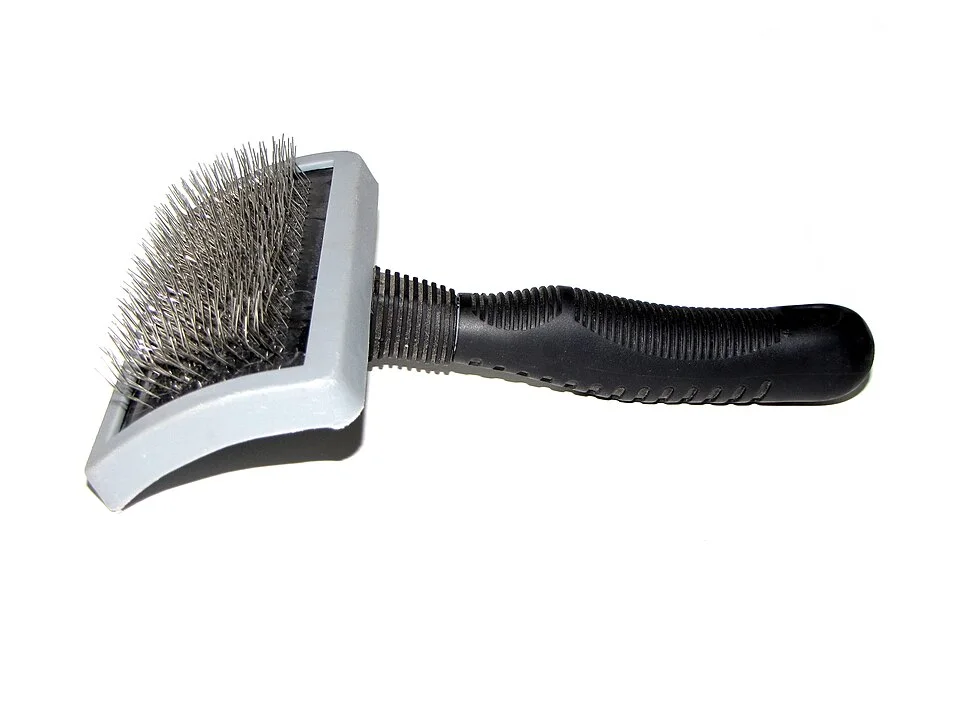
Identify the job first
Is the aim to remove loose hair, check for tangles or maintain a clipped coat? A short smooth coat, a dense undercoat and a continuously growing coat need different approaches. Ask a groomer to show you an appropriate tool and technique on your dog before buying a large kit.
Smooth and double coats
A soft brush or grooming mitt may suit a short smooth coat. Dense coats often need careful work through the undercoat as well as the surface. Work gently and check the skin. Stop if the dog is uncomfortable; pulling harder is not a solution to compacted hair or a painful tangle.
Long, curly and silky coats
A suitable brush followed by a comb can help identify areas that look tidy on top but remain tangled underneath. Friction areas around the ears, legs and harness deserve attention. Coat length, clipping and the dog’s tolerance affect the routine, so plan professional grooming where needed.
What a useful buying guide should tell you
Look for the intended coat, tooth or bristle design, size, maintenance and limitations. Breedlas equipment guidance is researched selection advice unless a page explicitly documents hands-on testing. We do not publish a claim that a product is best merely because it has an affiliate program.
Sources and further reading
ASPCA: dog grooming tips — https://www.aspca.org/pet-care/dog-care/dog-grooming-tips American Kennel Club: choosing a dog brush — https://www.akc.org/expert-advice/health/types-dog-brushes-shedding/