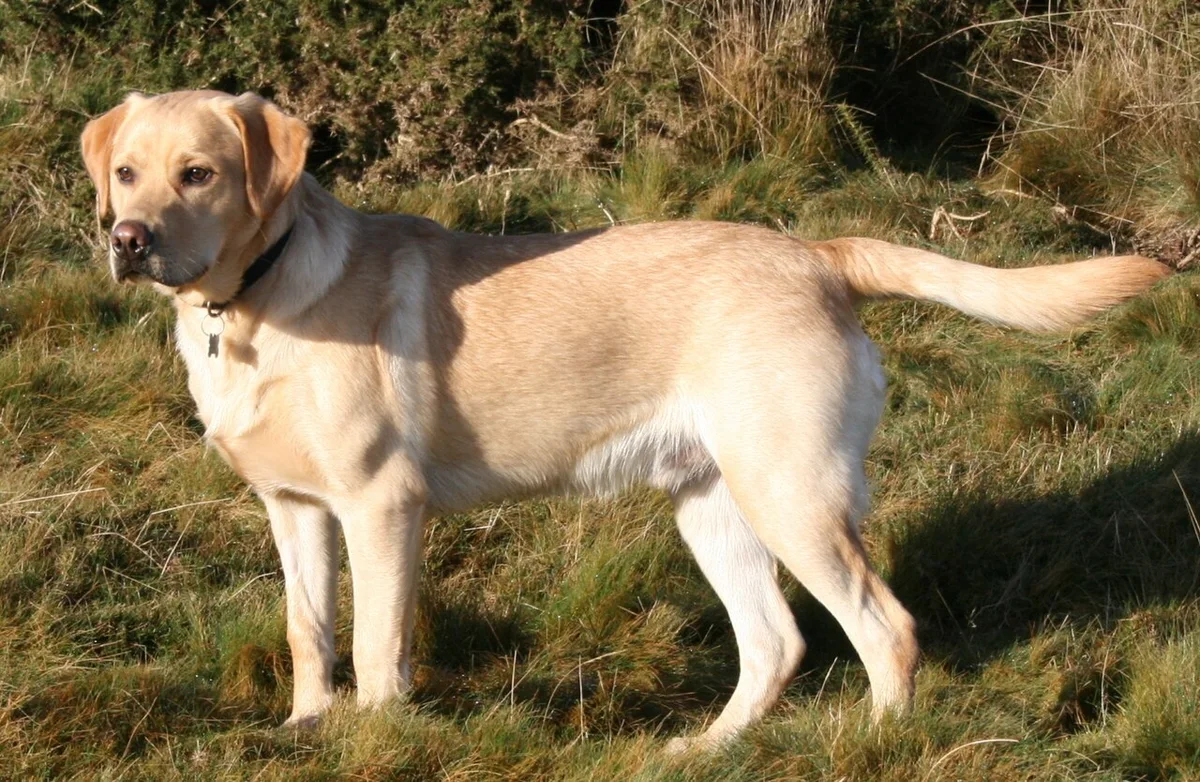


The daily commitment
- Exercise
- Build a varied day around walks, sniffing, suitable play and rest.
- Experience needed
- Willingness to learn still needs clear teaching and consistent practice.
- Shedding
- Expect regular loose hair and extra brushing during coat changes.
- Family considerations
- Plan calm greetings and supervised contact, particularly with young children.
A practical reading of our breed traits. Tendencies vary; these are not compatibility scores.
Living with a Golden Retriever
Think about where an active, people-oriented dog fits into the ordinary parts of your day: meals, school runs, working at home and visitors arriving. A dog that wants to be involved still needs to learn when to wait and where to rest. Give that learning the same attention as recall or retrieving.
The adolescent stage deserves particular thought. A young Golden can reach a substantial size before its manners are reliable. Arrange doors, greetings and walks so that it can practise useful behaviour rather than repeatedly rehearsing jumping or pulling. A familiar breed name does not tell you how an individual dog has been raised.
Exercise, enrichment and learning to settle
PDSA lists a minimum of two hours of exercise per day in its Golden Retriever guidance. That signals a substantial daily commitment; it is not a timetable to impose on a puppy or a dog with health limitations.
A useful day includes more than distance travelled. A sniffing walk, a short lesson and a controlled retrieve offer different experiences. Mix activity with undisturbed sleep and quieter periods; endlessly adding more fetch is not a substitute for a balanced routine. This is a planning example, not a fixed exercise prescription.
For puppies, older dogs or dogs with medical conditions, ask your vet how to adapt exercise. Choose activities and surfaces that suit the individual. If you enjoy water, check local conditions and provide supervision and a safe exit rather than assuming that every Golden swims confidently.
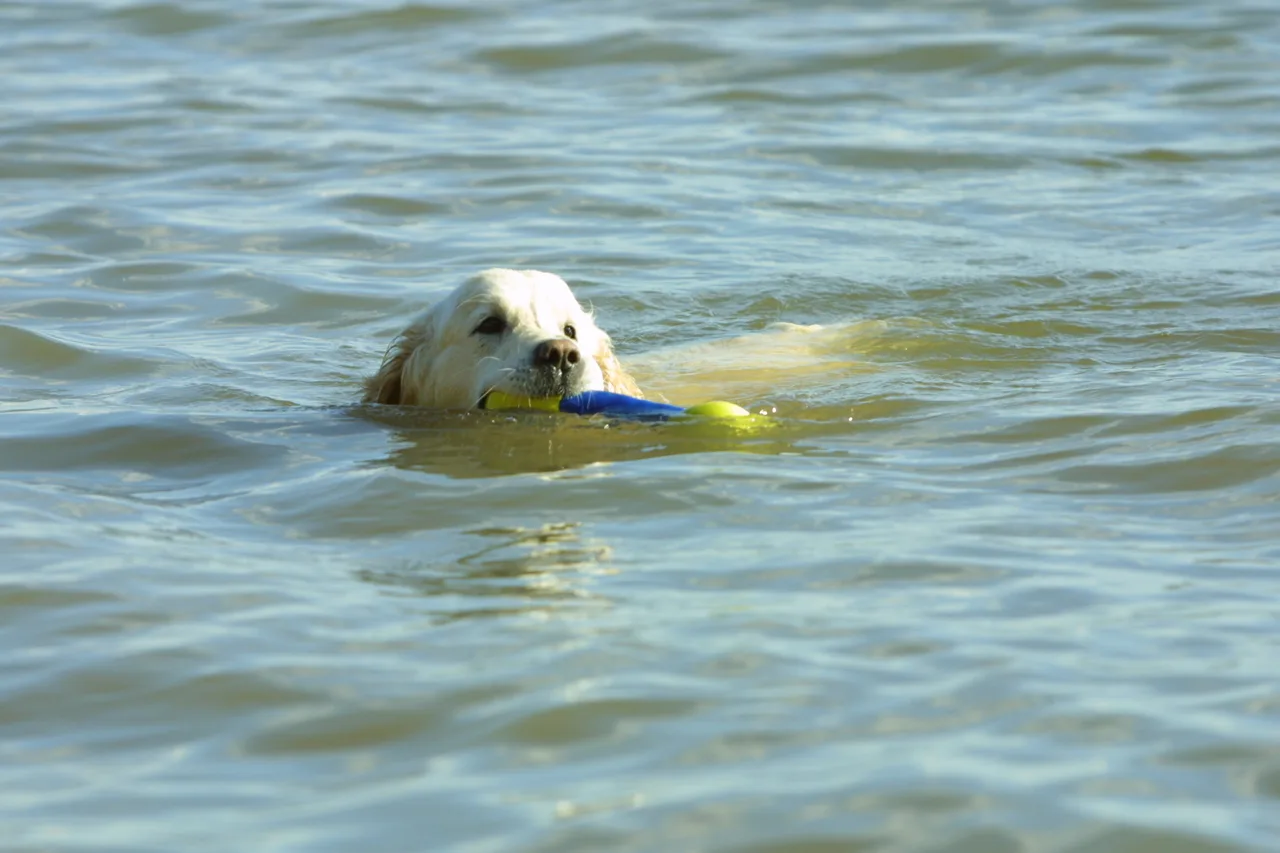
Retrieving can take different forms. Water activities still need suitable conditions, supervision and a safe way out. Image credits
Brushing, wet coats and everyday care
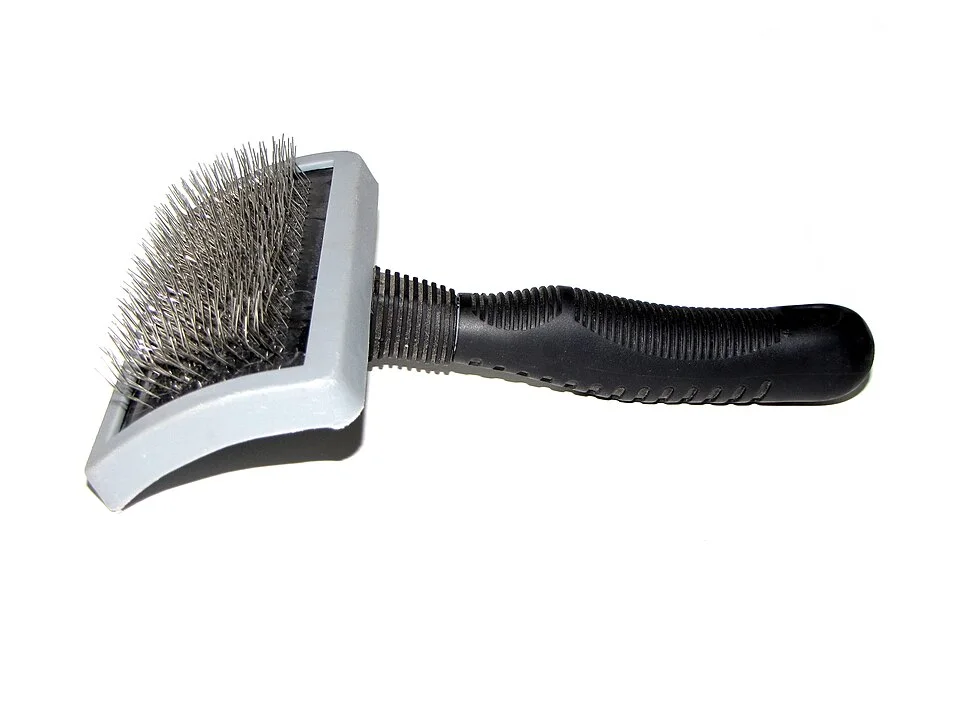
Plan to brush through the coat regularly, including the longer hair behind the legs and around the ears. Seasonal shedding adds work. A quick pass over the back can leave tangles elsewhere, so ask a groomer to show you a comfortable, thorough technique.
After a muddy walk or swim, allow time to check and dry the dog. Keep towels and an appropriate brush where they will actually be used. Routine paw, nail and tooth care also belongs in the weekly plan; introduce handling gradually rather than waiting until a difficult job is unavoidable.
Family life, other pets and time alone
Golden Retrievers are frequently considered by families, but the decision still turns on the adults’ available time. Children cannot carry the responsibility for exercise, supervision or veterinary care. Protect the dog’s resting space and teach both dog and children how to interact calmly.
For other pets, ask about the individual’s experience and make introductions gradually. For workdays, arrange company and toilet opportunities appropriate to the dog. Being sociable does not mean a Golden automatically copes with being left; alone-time learning needs to be gradual and supported by a workable care arrangement.
Appearance, history and different lines
The breed developed in Scotland as a retriever for work alongside people. That background offers context for its interest in carrying, searching and shared activity; it is not a promise that every dog will enjoy the same games. A flowing coat and recognisable outline tell you little about how a puppy will fit your schedule.
Ask breeders what their own dogs do and what they select for. Labels such as working or show line can start a useful conversation, but cannot replace meeting dogs, learning about relatives and discussing the individual litter. Choose temperament, health and a realistic care match before a preferred shade of gold.
- Check which registry or population a quoted size range describes.
- Expect individual and sex-related differences within adult ranges.
- Do not treat a coat-colour marketing label as evidence of better health.
Health screening: what to ask to see
The Golden Retriever Club of America recommends pre-breeding hip, elbow, eye and heart examinations. Ask for the parents’ registered names, identifiable results, dates and the relevant assessment scheme. Its guidance explains why records should be verifiable and why screening cannot remove all inherited risk.
Requirements and schemes vary by country. The Royal Kennel Club’s UK guidance also identifies breed-relevant DNA tests. Keep the jurisdiction clear: an American club recommendation and a UK scheme are not interchangeable paperwork. Your vet can help interpret what the available records do and do not establish.
Beyond a screening certificate
A test panel is only part of a health discussion. Ask about relatives’ health and longevity and any recurring problems in the family. The GRCA notes that some important conditions do not have routine screening; a reassuring certificate is not a guarantee against every future illness.
For an adult rescue dog, the available medical and behavioural history may be more informative than unknown parental records. Ask what has been observed, what treatment is ongoing and what remains uncertain. Plan routine care and a financial reserve or suitable insurance before bringing the dog home.
What to have ready
Start with an appropriate bed, lead and well-fitted walking equipment, food and water bowls, coat tools and safe chew options. Check that the car and resting spaces can accommodate an adult dog, and that floors and entryways are manageable after wet walks.
Budget locally for food, preventive care, grooming supplies, training, holiday care and unexpected veterinary costs. Replacement equipment and the time spent cleaning are easy to overlook. A puppy purchase or adoption fee is only one part of the commitment.
- Agree who provides each walk and who covers illness or travel.
- Arrange a quiet resting place where visitors and children leave the dog alone.
- Bring the supplied health records to the first veterinary appointment.
Common questions
Are Golden Retrievers suitable for first-time owners?
They can be, when the household can provide training, activity, grooming and company. Willingness to learn should not be confused with arriving already trained. Consider the adult size and the adolescent stage as well as the puppy.
Do Golden Retrievers shed a lot?
Yes. Regular loose hair and seasonal increases are practical realities. Brushing and cleaning help manage the coat, but cannot make the breed non-shedding.
Is a Golden Retriever or Labrador easier to live with?
There is no universal winner. Compare coat maintenance and daily care, then investigate the individual dogs and their backgrounds. Our comparison sets out the practical questions rather than awarding a compatibility score.
Golden Retriever · Breedlas
Questions to take with you
Use these questions when meeting a breeder or rescue. Ticks are temporary and stay on this page; print the list to take it with you.
Sources
View 7 references
Registry and club references support breed facts; care examples and comparisons are Breedlas editorial interpretation. Screening schemes are identified by country. No source can predict the health or behaviour of an individual dog.
Measurements and lifespan ranges are guides; individuals and registry standards vary.
- AKC: Golden Retriever
- Golden Retriever Club of America: about the breed
- PDSA: Golden Retriever care
- GRCA: health screenings for the parents of a litter
- Royal Kennel Club: Golden Retriever
- RSPCA: reward-based dog training
- Dogs Trust: choosing a rescue dog