
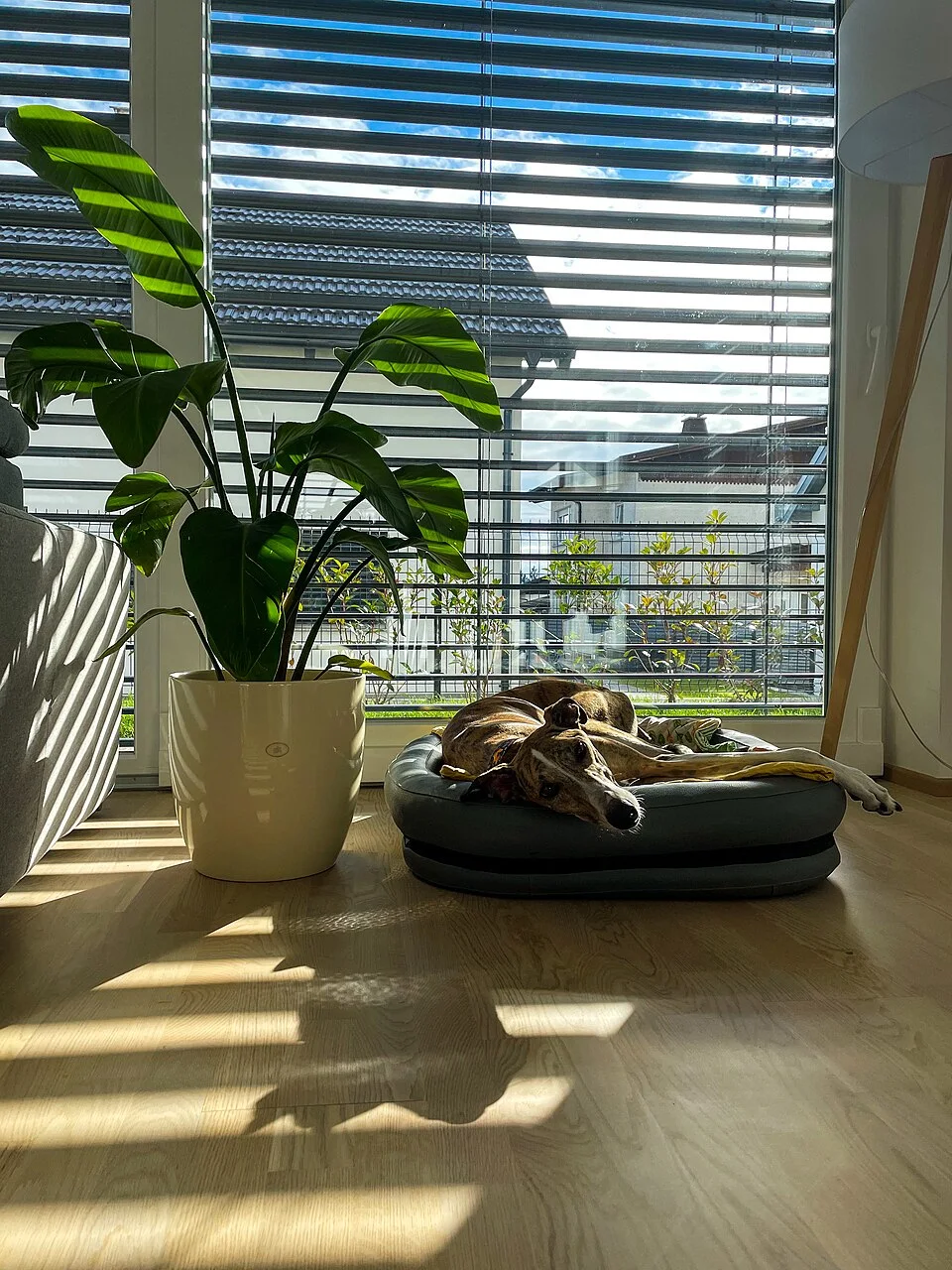
Make one calm base
Choose a quiet, accessible sleeping area away from constant foot traffic. Put water nearby and provide space for the dog to retreat without being followed. If using a crate or pen, introduce it gradually as a comfortable place; it should not replace company, exercise or toilet opportunities.
Look at the room from dog height
Secure medicines, cleaning products, food, electrical cables and small objects that could be swallowed. Check doors, gates, balconies and garden boundaries before arrival. Remove items you would struggle to replace while you learn what the dog investigates or chews.
Buy for the individual
Start with a bed, bowls, appropriate food, a lead, a correctly fitted collar or harness, identification and a few suitable enrichment items. Choose sizes from measurements rather than a breed label. Ask what food the dog currently eats and discuss changes with the previous carer or veterinarian.
Plan the people and pets
Agree on resting places, feeding, toilet trips and who takes responsibility at each point in the day. Make introductions to resident animals gradual and supervised, with a way to separate them comfortably. Give children clear guidance about leaving a resting or eating dog alone.
Sources and further reading
Royal Kennel Club: the best home environment for a puppy — https://www.royalkennelclub.com/your-dog/getting-a-dog/caring-for-a-new-pup/the-best-environment-for-your-puppy/ BC SPCA: bringing a new dog home — https://spca.bc.ca/get-help/pet-care/dogs/bringing-a-new-dog-home/