

The daily commitment
- Exercise
- Plan walks, sniffing and training; a garden alone is not a care plan.
- Experience needed
- Handling, distance from distractions and cooperative care deserve early attention.
- Shedding
- Expect loose undercoat, especially during seasonal coat changes.
- Other dogs
- Assess the individual dog and make a realistic separation plan.
A practical reading of our breed traits. Tendencies vary; these are not compatibility scores.
Living with an Akita
A reserved dog is not necessarily an undemanding dog. An Akita may be content to observe visitors rather than join the greeting, while still needing careful supervision and a way to withdraw. Decide where the dog can rest when deliveries, guests or children’s friends arrive.
For prospective owners, a useful rehearsal is to picture the difficult moments: meeting an off-lead dog on a narrow path, arranging holiday care, or taking a reluctant large dog to a veterinary appointment. If the plan depends on every encounter going smoothly, it needs more work. These are practical considerations, not predictions about every Akita.
Exercise and training
The daily commitment includes both activity and management. Choose walking routes with room to create distance, practise calm lead walking, and use secure spaces for off-lead activity where appropriate. Reward checking in with you; do not make close contact with unfamiliar dogs the measure of successful socialisation.
Teach the small skills that make a large dog easier to care for: waiting at doors, moving behind a gate, accepting a harness and standing comfortably for examination. Short lessons with clear rewards are more useful than a contest of physical strength. Exercise should suit age, health and conditions; discuss limitations with your vet rather than treating a generic time allowance as a prescription.
Coat care and seasonal shedding
The thick double coat is a practical household consideration. Seasonal loss of undercoat can be much more conspicuous than day-to-day shedding, so plan time for thorough brushing and cleaning rather than expecting an occasional bath to solve it.
A sensible care station includes suitable coat tools, towels and a non-slip surface. Introduce brushing, paw handling and nail care gradually while the dog is comfortable. Ask a groomer to demonstrate how to reach the undercoat without scraping the skin; persistent redness, odour or hair loss belongs in a veterinary conversation.
Children, visitors and other animals
The Akita Club of America highlights prey drive and intolerance of other dogs as important considerations. A puppy’s friendly behaviour does not settle every question about its adult relationships. Ask about the parents and close relatives, and about the individual dog’s observed responses in different settings.
Use physical separation when supervision is not possible. Give children clear rules about leaving a resting or eating dog alone, and give the dog an undisturbed place to go. If another dog or cat already lives with you, discuss a staged introduction and a fallback arrangement before committing. No breed description can certify that a particular pairing is safe.
American Akita and Japanese Akitainu
The names can be confusing across countries. The FCI recognises Akita and American Akita as separate entries, while this catalog’s Akita measurements follow the AKC reference. Confirm which population a breeder or rescue means before comparing size, appearance or pedigree documents.
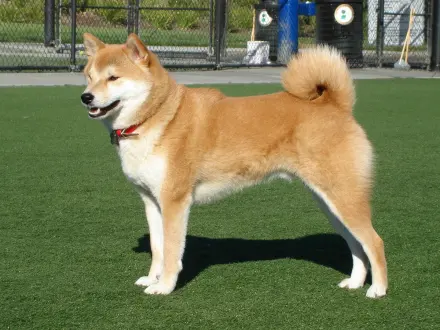
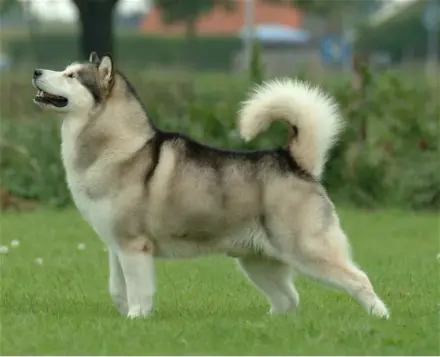
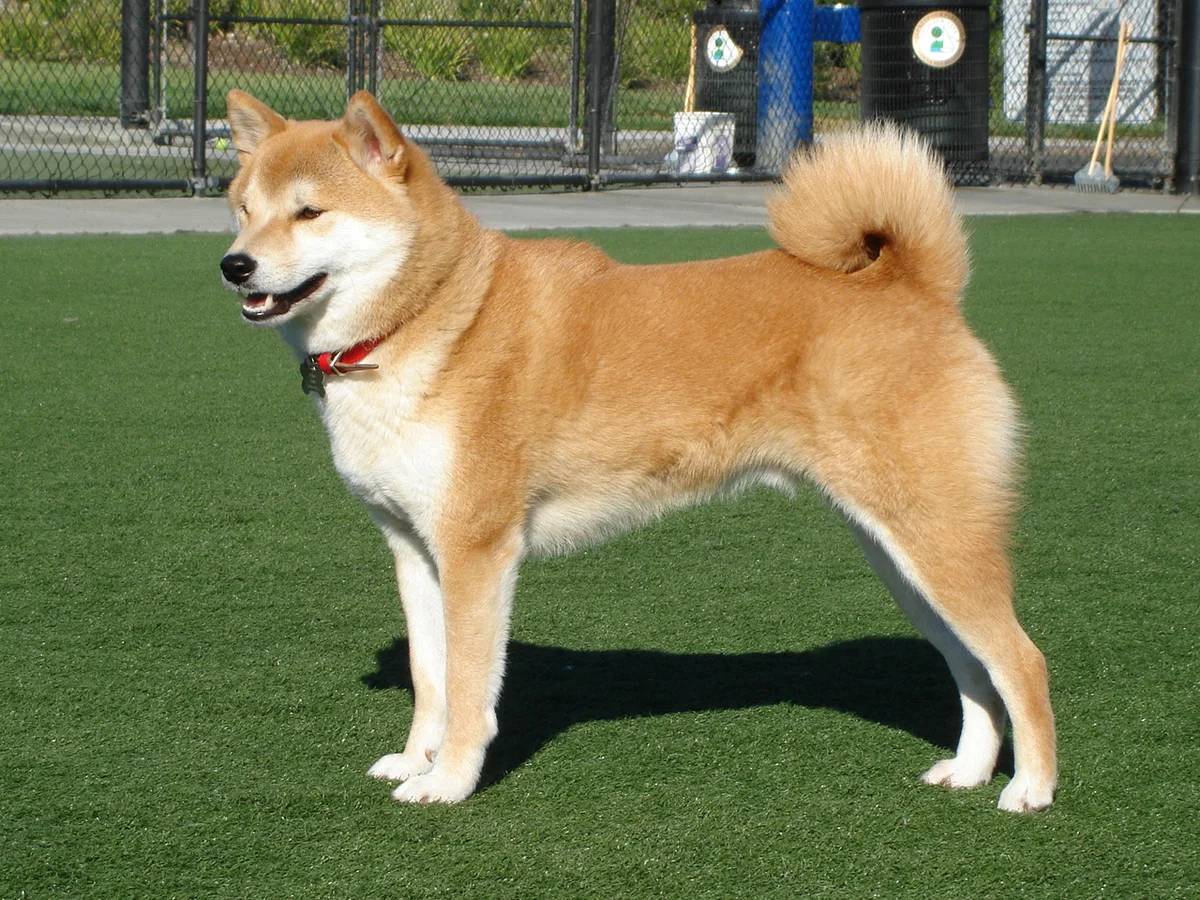
Both histories lead back to Japan, with subsequent American development reflected in the American Akita. Broad appearance clues include a substantial frame, erect ears and a curled tail, but a photograph is not proof of ancestry. Use the dog’s records and the relevant registry standard rather than relying on coat colour or a seller’s label.
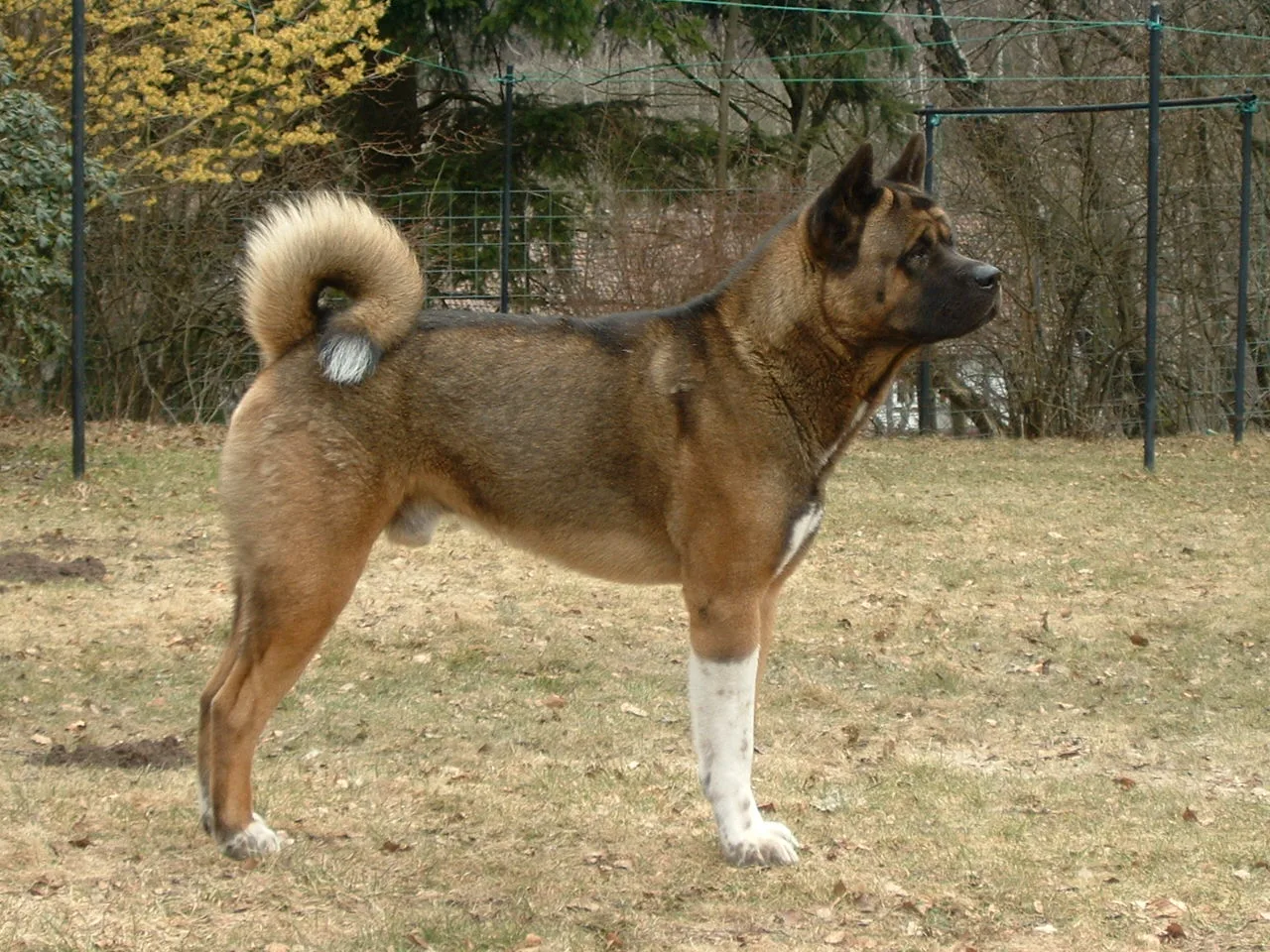
A full-body view makes the frame and tail easier to see than a head portrait. Photograph of an American Akita. Image credits
Health: records and questions
For breeding dogs, the Akita Club of America currently lists hip evaluation, an eye examination and a thyroid panel among its minimum recommended screening. Ask to see the named results for both parents, confirm the dogs’ identities and dates, and have anything unclear explained by the breeder and your vet. “Vet checked” is not a substitute for those records.
Screening reduces uncertainty; it does not promise a healthy puppy. Discuss the family’s medical history as well as the tests, and ask about skin and eye problems and gastric dilatation-volvulus (GDV, often called bloat). The club identifies GDV as an emergency. Arrange veterinary and emergency care before bringing a dog home. This overview is not a diagnosis or a treatment plan.
Preparing your home and budget
Check whether your doors, gates, car setup and walking equipment can accommodate the adult dog. A quiet resting area and a reliable way to separate animals are more useful than buying every accessory at once. Practise the arrangements with every adult who will provide care.
Build a local budget for food, routine care, insurance or an emergency reserve, training and suitable boarding. Obtain quotes that name the breed and any relevant exclusions. We do not give one international monthly price: veterinary costs, insurance and accommodation rules depend on where you live.
- Identify a backup carer who is comfortable with this particular dog.
- Ask your insurer, landlord or accommodation provider about relevant conditions.
- Arrange a first veterinary visit and keep the supplied records together.
Common questions
Is an Akita a good first dog?
It can be a demanding starting point. Consider handling strength, social management, access to suitable help and the individual dog’s history. Enthusiasm for the appearance is not enough preparation.
Can an Akita live with another dog?
Some do, but compatibility should never be assumed. Ask about observed behaviour and plan introductions, supervision and separation with experienced support. Choose the individual match rather than trusting a breed-wide promise.
Does an Akita need a large garden?
Outdoor access can be useful, but it does not replace walks, training or secure management. Assess your routes, boundaries and daily care arrangements as a whole.
Akita · Breedlas
Questions to take with you
Take these questions to a breeder or rescue. Tick them as you obtain answers; the ticks are not saved or sent anywhere.
Sources
View 8 references
Registry and club references support breed facts; care examples and comparisons are Breedlas editorial interpretation. Screening schemes are identified by country. No source can predict the health or behaviour of an individual dog.
Measurements and lifespan ranges are guides; individuals and registry standards vary.
- Akita Club of America: meet the Akita
- Akita Club of America: AKC breed standard
- FCI: Akita, standard 255
- FCI: American Akita, standard 344
- Akita Club of America: health clearances
- Akita Club of America: health concerns
- RSPCA: reward-based dog training
- Dogs Trust: choosing a rescue dog