
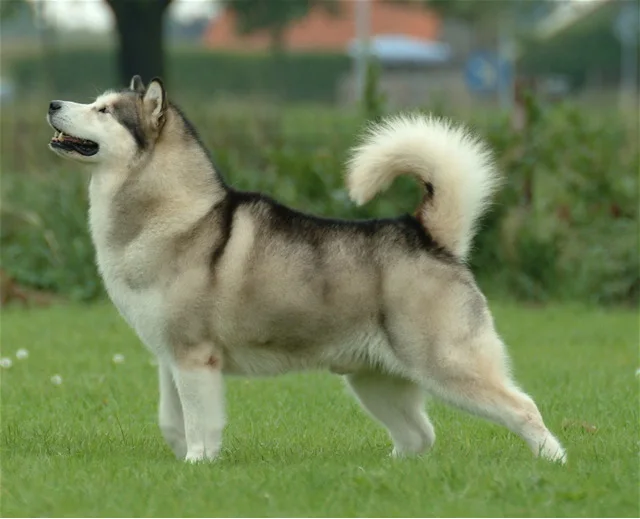
Living with this breed
An Alaskan Malamute is a powerful dog developed for sustained work rather than a larger Siberian Husky. Its size and strength affect leads, gates, transport and everyday handling. Decide whether all adults in the home can manage the individual safely, including when it notices another animal.
Exercise and training
Offer regular activity, scent exploration and reward-based training in useful daily skills. Practise calm leash walking and coming when called in controlled settings. Physical power is not a reason to start heavy pulling work with a young dog; discuss age, conditioning and appropriate activities before asking it to carry or pull loads.
Coat care
The dense coat needs regular brushing and thorough attention during seasonal shedding. Check the skin beneath the fur and keep nails and feet maintained. Wet, thick fur takes time to dry. A dog bred for cold conditions still needs considerate management in warm weather, including a cool place to rest.
Household considerations
Introductions to other dogs need planning, and small animals require particular caution. Do not interpret friendliness towards people as a promise about every animal interaction. Supervise children, manage access to food and resting areas, and build comfortable short absences rather than expecting an independent working background to mean effortless solitude.
Health and questions to ask
Ask about hip and elbow assessments and the breed’s current inherited-disease recommendations, including polyneuropathy where relevant. Discuss thyroid, eye and family health history with a veterinarian. A good breeder can explain the actual tests and their limits, not merely state that a large dog comes from strong stock.
Sources and approach
Breedlas combines registry information with editorial interpretation. Trait levels describe general tendencies, not guarantees about an individual dog.
Read our editorial approach