Living with this breed
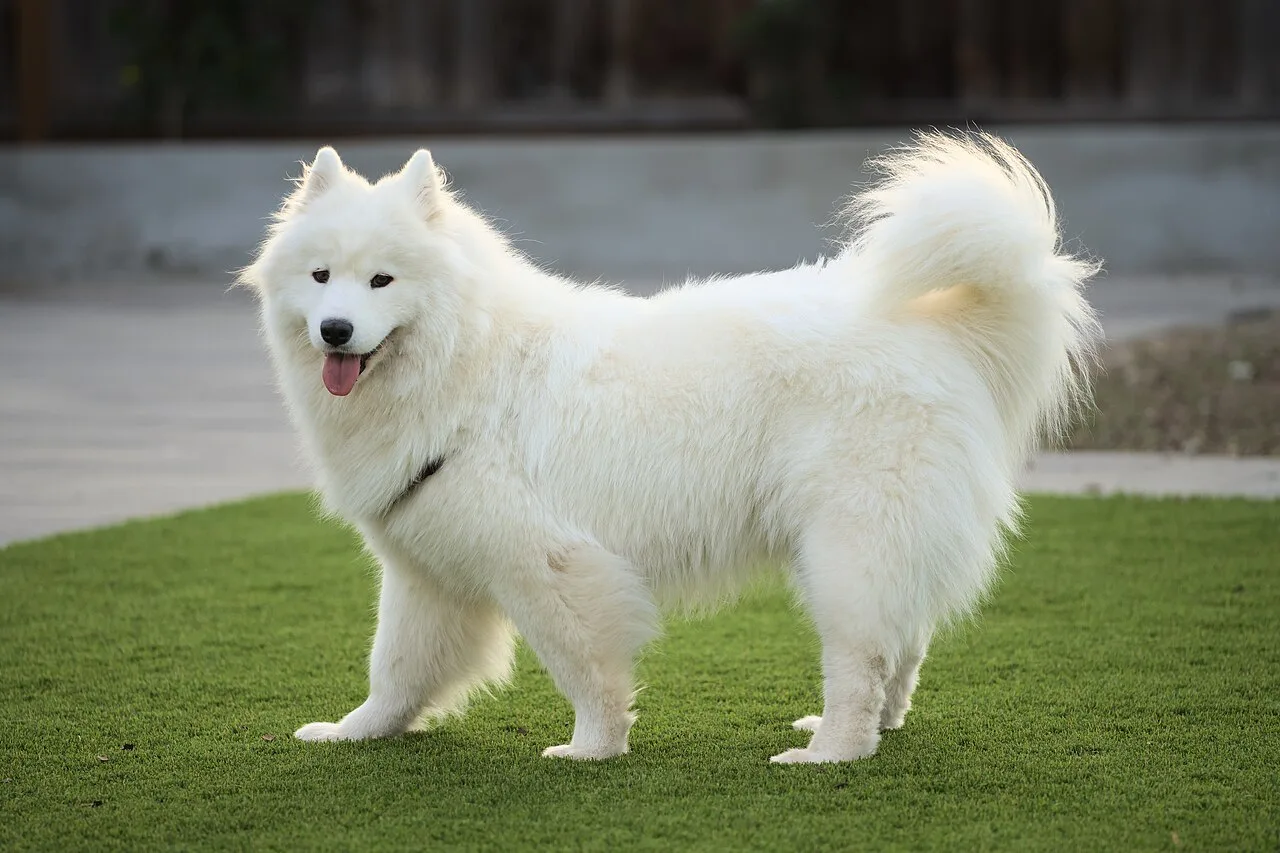
The Samoyed’s expressive face and white coat can distract from an active working background. Many individuals want to participate closely in family life and announce what they notice. Before choosing one, consider the sound, the shed hair and the time required to keep a social dog usefully occupied.
Exercise and training
Provide regular walks, opportunities to sniff and reward-based lessons. Practise coming when called, calm greetings and resting after activity. A willing companion still needs consistent teaching, particularly around movement and other animals. Avoid making every interaction exciting if the dog needs help learning that ordinary household time can be uneventful.
Coat care
The double coat demands thorough brushing, especially during coat changes. Comb areas where friction creates tangles and check that the skin underneath remains comfortable. A white surface is not proof that the coat is fully clean or dry. Choose grooming help familiar with double coats rather than making a close clip the default.
Household considerations
Plan carefully for neighbours and shared walls, since vocal behaviour can be conspicuous. Children and other pets need supervised interactions and space away from play. Build short, comfortable absences gradually. A dog’s interest in people does not tell you how it will cope when a busy household suddenly becomes empty.
Health and questions to ask
Ask about hip, eye and heart assessments and discuss the parent-club health recommendations with a veterinarian. Request the actual results and relevant family history. In warmer climates, agree a practical activity and cooling routine; neither the coat’s appearance nor an apparently cheerful expression reliably describes comfort.
Sources and approach
Breedlas combines registry information with editorial interpretation. Trait levels describe general tendencies, not guarantees about an individual dog.
Read our editorial approach