
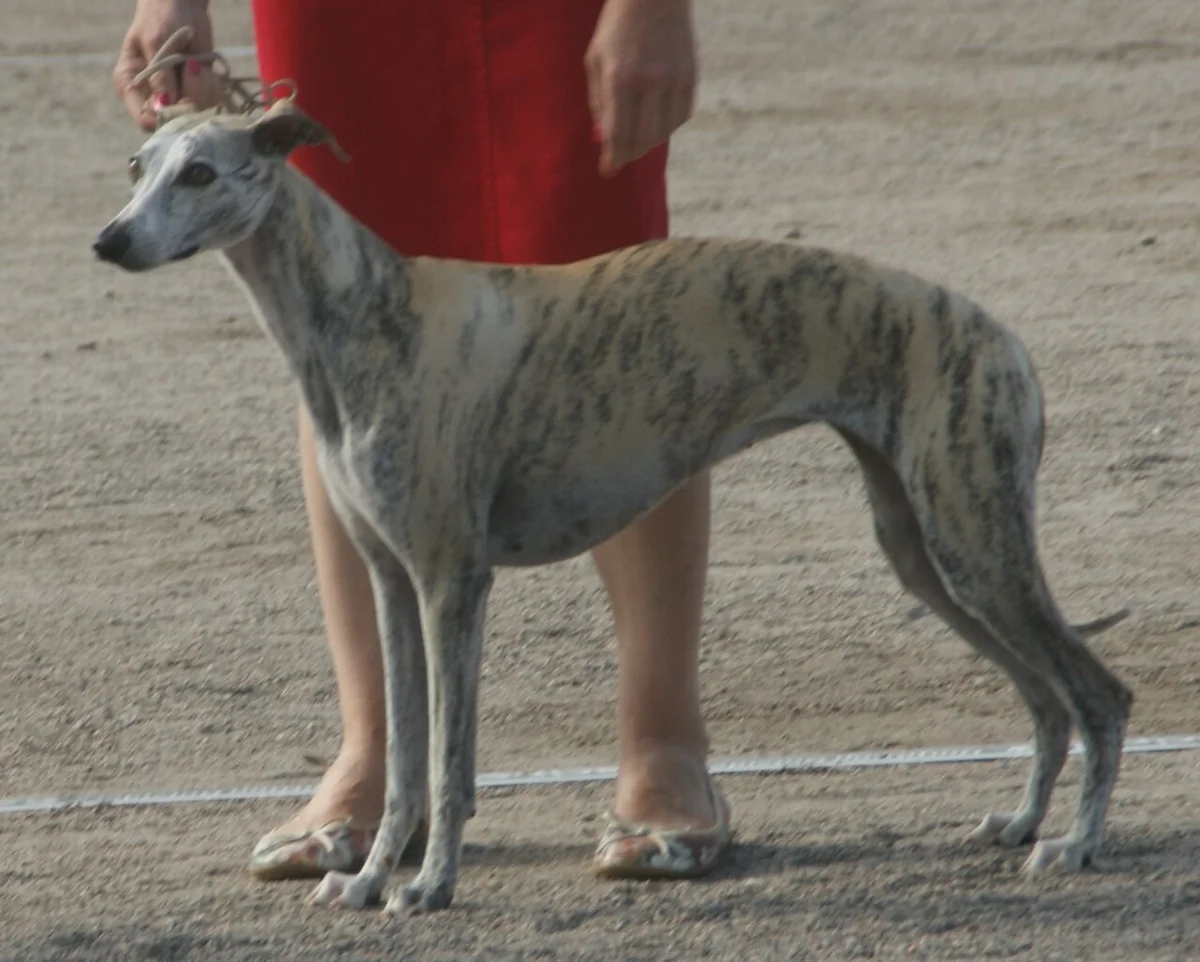
Living with this breed
A Whippet can be restful indoors while still reacting quickly to movement outside. The combination suits some households well, provided they have safe places for activity. Do not judge exercise or chase interest by the dog’s ability to curl up on a sofa; both parts of its routine matter.
Exercise and training
Offer walks, sniffing and opportunities to run only where the area is secure and suitable. Teach coming when called with rewards, but use a leash when wildlife or traffic makes a mistake dangerous. Train calm handling and rest as well as active skills. A growing dog needs age-appropriate activity rather than repeated maximal sprinting.
Coat care
The short coat needs comparatively little brushing. Check nails, feet and skin after outings, and provide comfortable bedding for the lean body. Cold or wet conditions may call for suitable clothing. Introduce equipment gently and check fit; a dog’s narrow shape makes generic size labels less useful than actual measurements.
Household considerations
Supervise introductions to cats and small animals because dog-social behaviour does not establish safety around animals that run. An adult rescue may have a history that helps guide management, but new situations still need care. Give children guidance on quiet handling and leave the dog a resting area away from rough play.
Health and questions to ask
Ask about eye and heart screening recommendations and discuss health history with the breeder or rescue. A veterinarian can help assess body condition appropriately for a lean sighthound, rather than comparing it with a heavier breed. Investigate changes in movement or comfort even if the dog still wants to run.
Sources and approach
Breedlas combines registry information with editorial interpretation. Trait levels describe general tendencies, not guarantees about an individual dog.
Read our editorial approach