
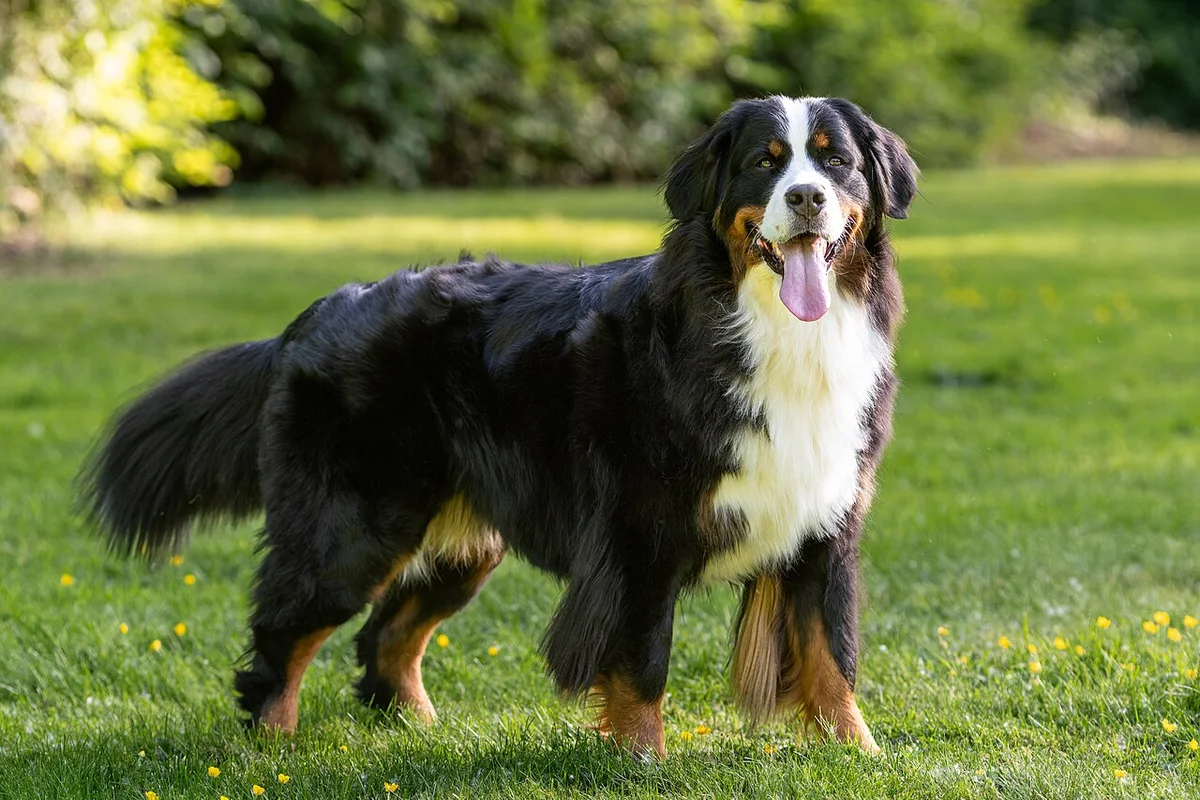
Living with this breed
A Bernese Mountain Dog can be an affectionate household companion while occupying a great deal of space. Wet fur, a large bed and getting an injured adult into a vehicle are practical questions worth answering early. A gentle reputation does not make a strong, growing youngster small or automatically coordinated.
Exercise and training
Provide regular walks and reward-based lessons in calm greetings, coming when called and walking comfortably on a leash. Keep activity appropriate to age, body condition and temperature. A dog that enjoys joining in still needs rest, especially during growth; enthusiasm alone cannot determine suitable exercise duration or intensity.
Coat care
The long double coat sheds heavily and needs thorough brushing. Pay attention behind the ears, around the legs and beneath the tail where tangles can develop. Dry the coat properly after wet outings. Teach grooming cooperation and comfortable foot handling before a full-sized dog needs lengthy care.
Household considerations
Supervise play around children and smaller animals because weight can cause accidental injury even without rough intent. Arrange a cool, accessible place to rest and consider stairs. Ask how the individual copes with absences and visitors; close companionship should be supported by a routine that also allows calm independence.
Health and questions to ask
Ask about hip and elbow screening, eye assessments and the health and longevity of close relatives. Discuss cancer history and bloat with a veterinarian. The breed’s relatively short reference lifespan is a meaningful part of planning, alongside insurance, transport and the cost of caring for a large dog.
Sources and approach
Breedlas combines registry information with editorial interpretation. Trait levels describe general tendencies, not guarantees about an individual dog.
Read our editorial approach