
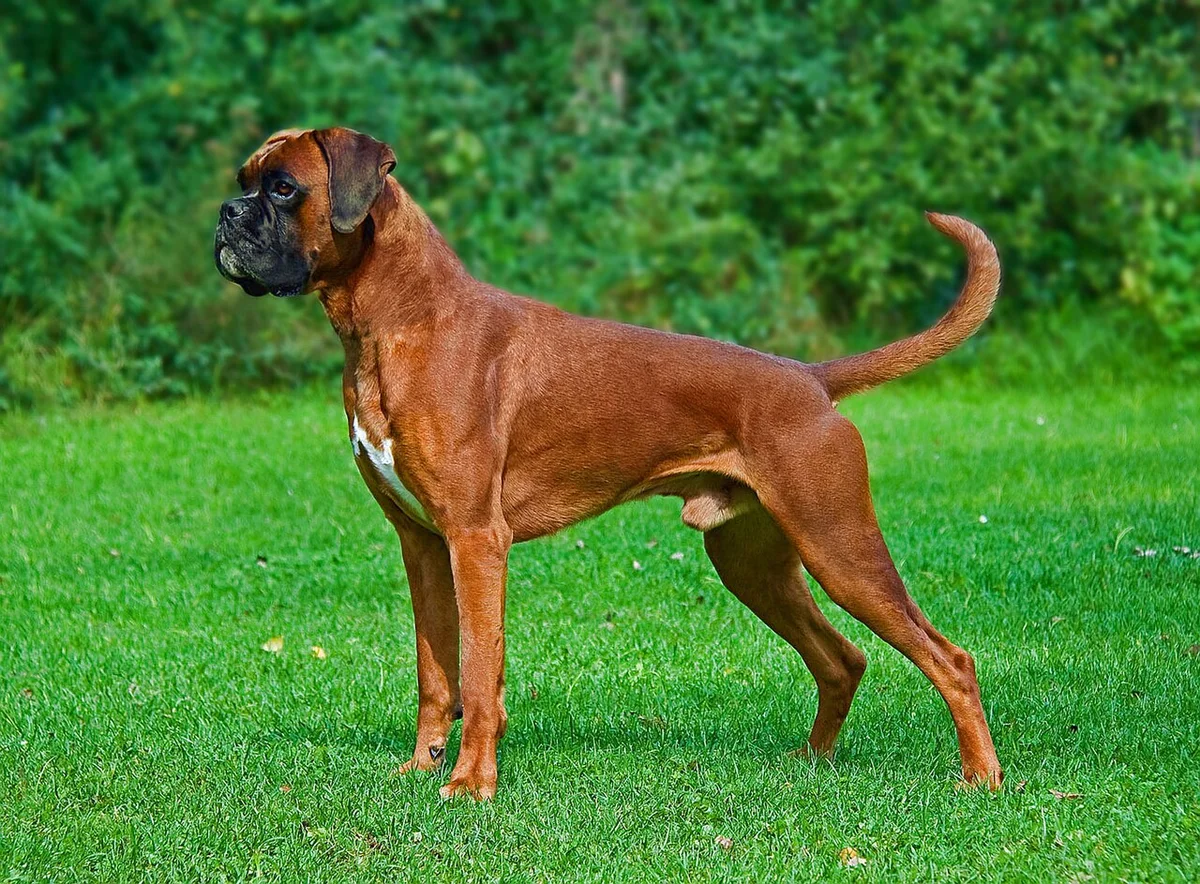
Living with this breed
A Boxer often brings physical enthusiasm to play and greetings. That can be enjoyable for an involved household but overwhelming for someone expecting an immediately composed adult. Think about how you will manage a strong youngster at doors, around visitors and alongside children before focusing on the affectionate reputation.
Exercise and training
Provide varied exercise and reward-based lessons that include walking calmly on a leash and resting after activity. Practise greetings without jumping. Match intensity to weather and the individual’s breathing and fitness, since a keen dog may want to continue beyond a sensible point. Mental work can be engaging without being physically frantic.
Coat care
The short coat is comparatively easy to brush, but the dog still needs nail care, tooth brushing and skin checks. Introduce all handling calmly. A short coat offers limited protection in extreme conditions, so arrange comfortable indoor rest and choose walks with heat or cold in mind.
Household considerations
Supervise play around children and smaller animals because enthusiasm and body weight can cause accidental injury. Give the dog quiet space and teach visitors how to reinforce calm behaviour. Ask about the individual’s social responses and ability to rest alone rather than assuming all Boxers express affection in the same way.
Health and questions to ask
Ask specifically about heart assessments, hip health, thyroid conditions and relevant inherited-disease testing. Discuss family history and any exercise-related changes with a veterinarian. A lively greeting does not prove cardiovascular health. Screening evidence should be dated and identifiable to the breeding dogs, not just described as a routine veterinary check.
Sources and approach
Breedlas combines registry information with editorial interpretation. Trait levels describe general tendencies, not guarantees about an individual dog.
Read our editorial approach