
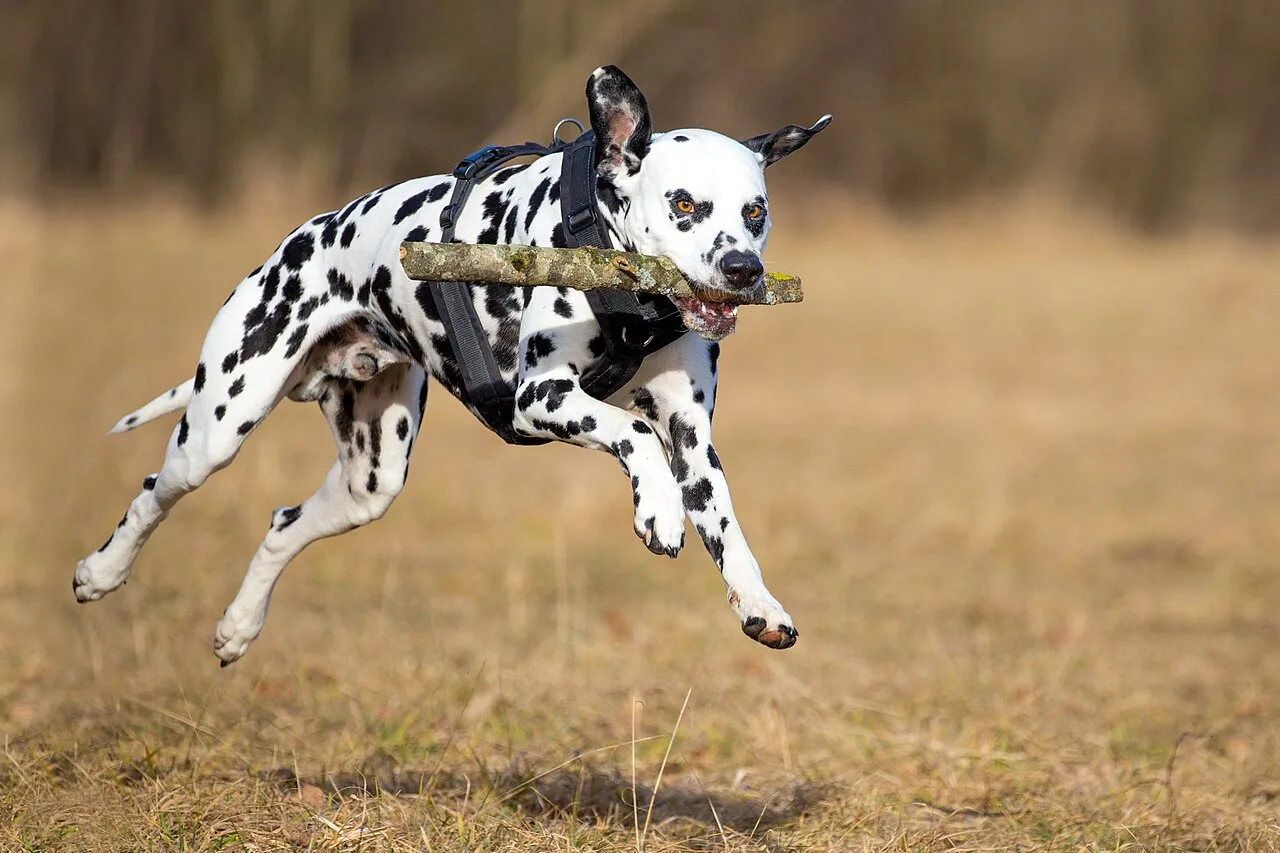
Living with this breed
A Dalmatian’s coat is easy to recognize, but an owner needs to look beyond the spots. This is an active, strong dog that may remain enthusiastic well beyond puppyhood. Think about regular outdoor activity, calm household routines and training time rather than choosing it as a visually distinctive family accessory.
Exercise and training
Offer regular exercise, scent exploration and reward-based lessons in coming when called and walking calmly on a leash. Build fitness gradually and tailor activity to age and condition. Teach resting after outings so the dog does not depend on constant stimulation. A large garden does not replace purposeful daily interaction.
Coat care
The short coat sheds noticeably and benefits from regular brushing. Check feet and skin after activity and introduce nail care and tooth brushing calmly. A coat that rarely tangles can still leave considerable hair on furniture and clothing. Choose the maintenance routine with that reality in mind, not just coat length.
Household considerations
Supervise children and other animals because strength and enthusiasm can overwhelm smaller companions. If an individual has hearing loss, learn clear communication and safe management suited to that dog rather than treating deafness as a training failure. Ask a breeder or rescue for practical observations about household behaviour and confidence.
Health and questions to ask
Request documented hearing testing and ask about urinary-stone risk, relevant genetic information and family health. Discuss diet, hydration and any special requirements with a veterinarian rather than selecting a breed-marketed supplement. Hearing status and medical history are more useful decision factors than spot pattern, eye colour or a memorable appearance.
Sources and approach
Breedlas combines registry information with editorial interpretation. Trait levels describe general tendencies, not guarantees about an individual dog.
Read our editorial approach