

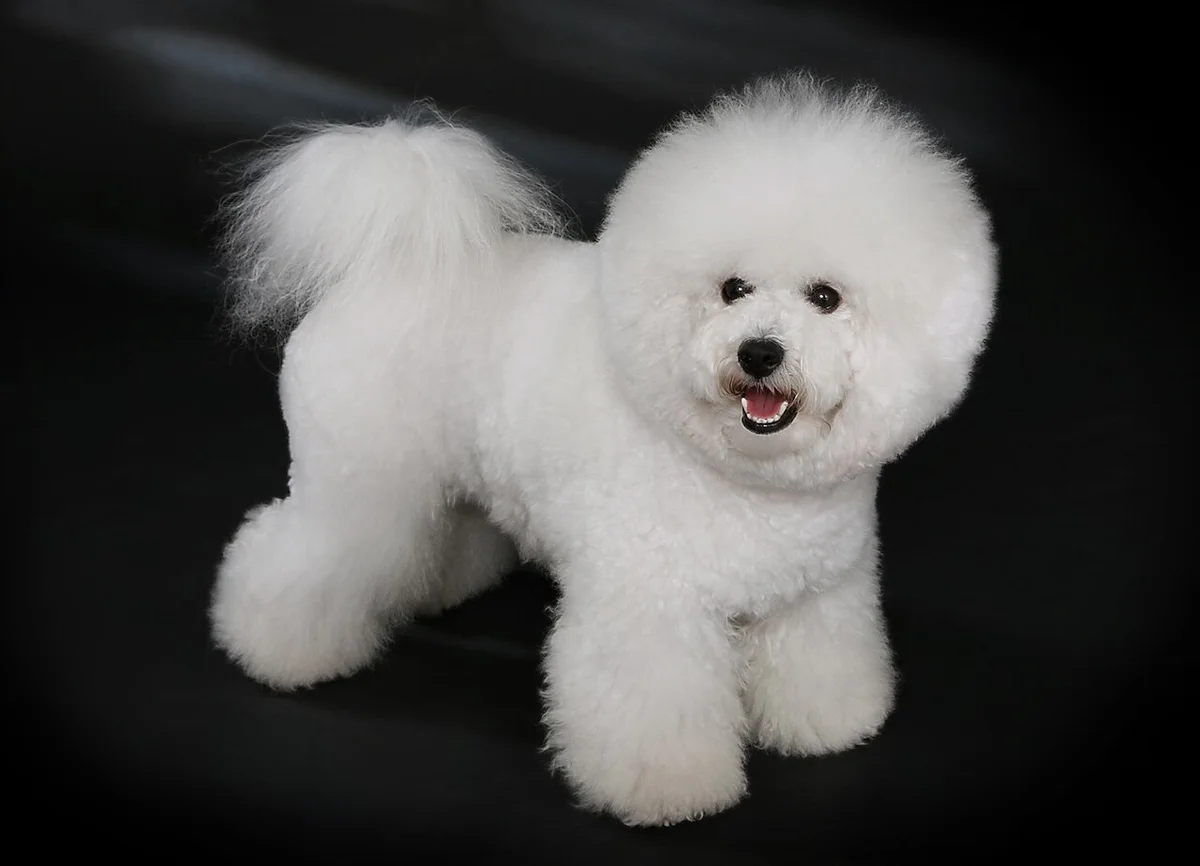
Living with this breed
A Bichon Frise can bring a cheerful interest in people to a small home. Close companionship is part of the attraction, yet the dog still needs opportunities to rest independently. Before choosing one, consider who will maintain the coat and how a social dog will spend the quieter parts of the week.
Exercise and training
Regular walks and short sessions of play and reward-based training suit this active small companion. Practise coming when called, calm greetings and toilet routines consistently. A dog that learns entertaining tricks can also learn useful daily skills; make grooming cooperation and relaxed waiting part of the same training effort.
Coat care
The dense curls require frequent brushing, combing and regular trimming. Work through the whole coat rather than leaving tight hair against the skin. Budget for knowledgeable grooming or learn the skills properly. Low shedding does not mean the dog cannot trigger allergies, and a clean-looking white coat can still conceal irritation.
Household considerations
Bichons are often interested in people and other dogs, but supervised introductions remain necessary. Children need to understand how to play gently and respect a resting dog. Build short, manageable periods alone, and ask how an adult dog already copes with separation instead of assuming a companion breed will tolerate any schedule.
Health and questions to ask
Ask about eye and patella screening, skin history and recurring ear or bladder problems in the individual or family. Discuss a preventive dental routine with a veterinarian. A reassuring coat or lively greeting cannot replace medical records, and grooming appointments are not a substitute for noticing changes between visits.
Sources and approach
Breedlas combines registry information with editorial interpretation. Trait levels describe general tendencies, not guarantees about an individual dog.
Read our editorial approach