
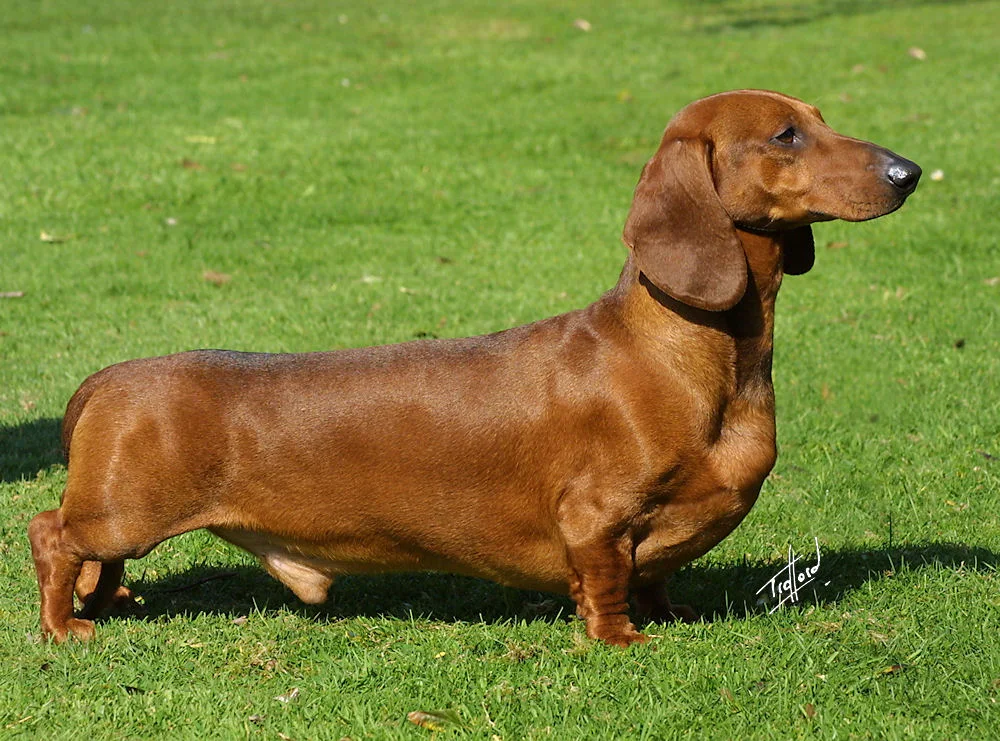
Living with this breed
A Dachshund was developed to work with determination, so independence should not be surprising in a companion home. Its low height can hide considerable confidence and interest in smells or small animals. Decide whether you like a persistent hound character instead of expecting a small dog to be automatically compliant.
Exercise and training
Offer regular, controlled walks and scent games, then teach lead manners and recall with rewards the dog values. Manage opportunities to chase wildlife. Talk to a veterinarian about appropriate exercise and access arrangements rather than letting the long body become a reason for either excessive jumping or a life with little movement.
Coat care
Smooth, longhaired and wirehaired coats have different grooming requirements. Longer feathering needs combing, while maintaining a wire coat may require knowledgeable help. All varieties need nail and dental care. Check the underside after walks because a low dog can collect dirt and vegetation that taller companions miss.
Household considerations
Teach everyone how to handle and support the dog securely, and supervise interactions with children and larger dogs. Barking can be prominent, especially when the dog is excited by activity outside. Size labels also vary between registries, so ask which standard and variety the record describes before comparing measurements.
Health and questions to ask
Back and disc health deserves a specific discussion before adoption or purchase. Ask about family history and any relevant screening programme, and maintain a healthy body condition with veterinary guidance. Learn which changes in movement or comfort need prompt attention rather than treating a reluctance to move as stubbornness.
Sources and approach
Breedlas combines registry information with editorial interpretation. Trait levels describe general tendencies, not guarantees about an individual dog.
Read our editorial approach