
Living with this breed
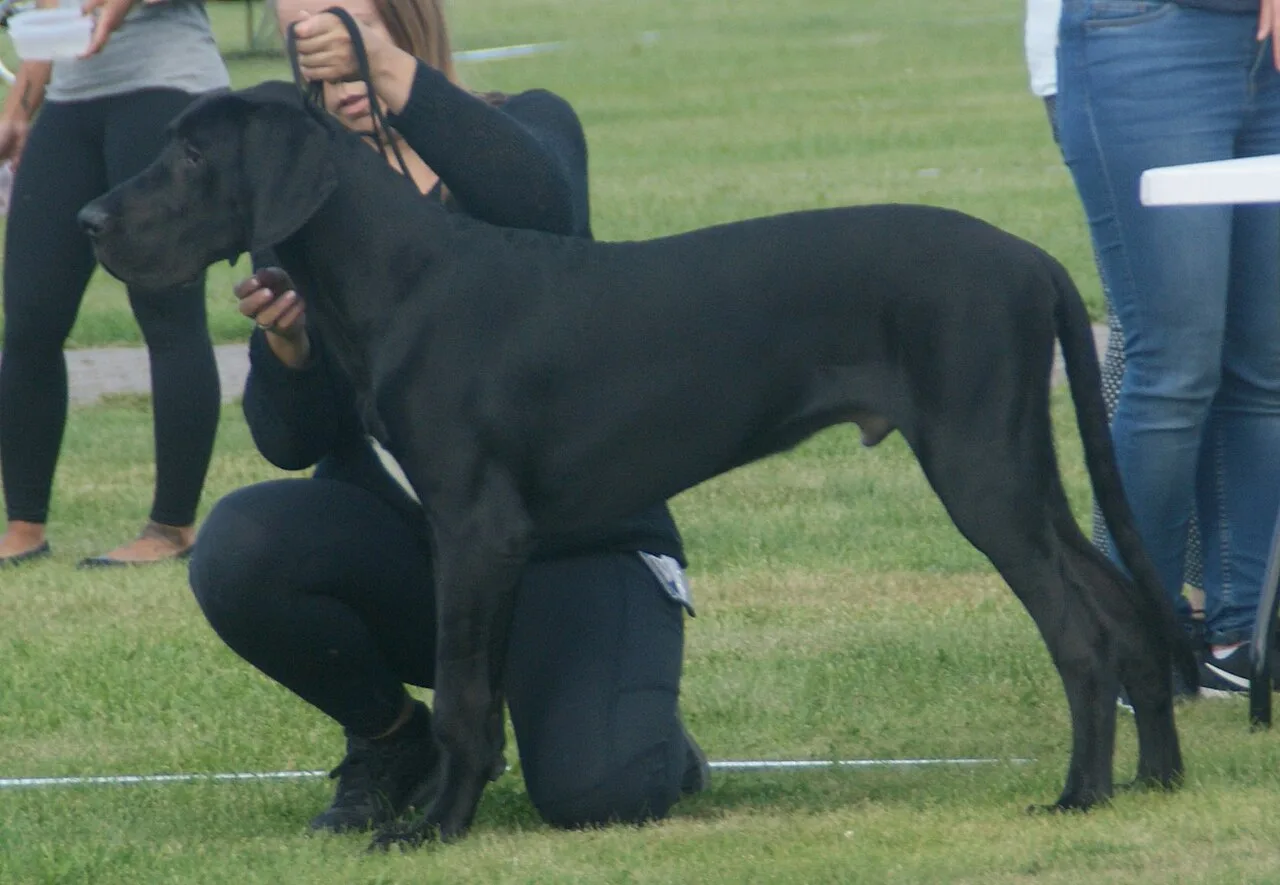
A Great Dane can reach tables and counters without effort and fill a doorway simply by standing in it. Before choosing one, measure the practical realities: vehicle space, resting areas and how an adult could be moved if unwell. A calm manner does not make the scale of the dog disappear.
Exercise and training
Teach calm greetings, walking on a loose leash and comfortable handling early. Offer regular activity suited to age and condition, with controlled exercise during growth rather than forced distance. Reward-based skills that seem ordinary in a smaller dog become essential when an adolescent already outweighs some family members.
Coat care
The short coat is straightforward to brush, although shedding and general cleaning still occur. Keep nails, teeth and skin maintained. A large dog needs a comfortable resting surface and appropriate protection from weather. Practise standing for examination and getting into transport in a way that will remain workable at adult size.
Household considerations
Supervise children and smaller animals and leave room for the dog to turn and rest without being crowded. Consider whether all adults can manage the dog on walks and at doors. Ask about the individual’s behaviour with visitors, other dogs and time alone instead of assuming that “gentle giant” answers every question.
Health and questions to ask
Bloat requires a specific veterinary discussion, including recognizing an emergency and whether preventive measures are appropriate. Request heart, hip, thyroid and eye screening information and ask about longevity in the family. Make food, insurance and emergency transport plans using adult size, not the manageable puppy in front of you.
Sources and approach
Breedlas combines registry information with editorial interpretation. Trait levels describe general tendencies, not guarantees about an individual dog.
Read our editorial approach