
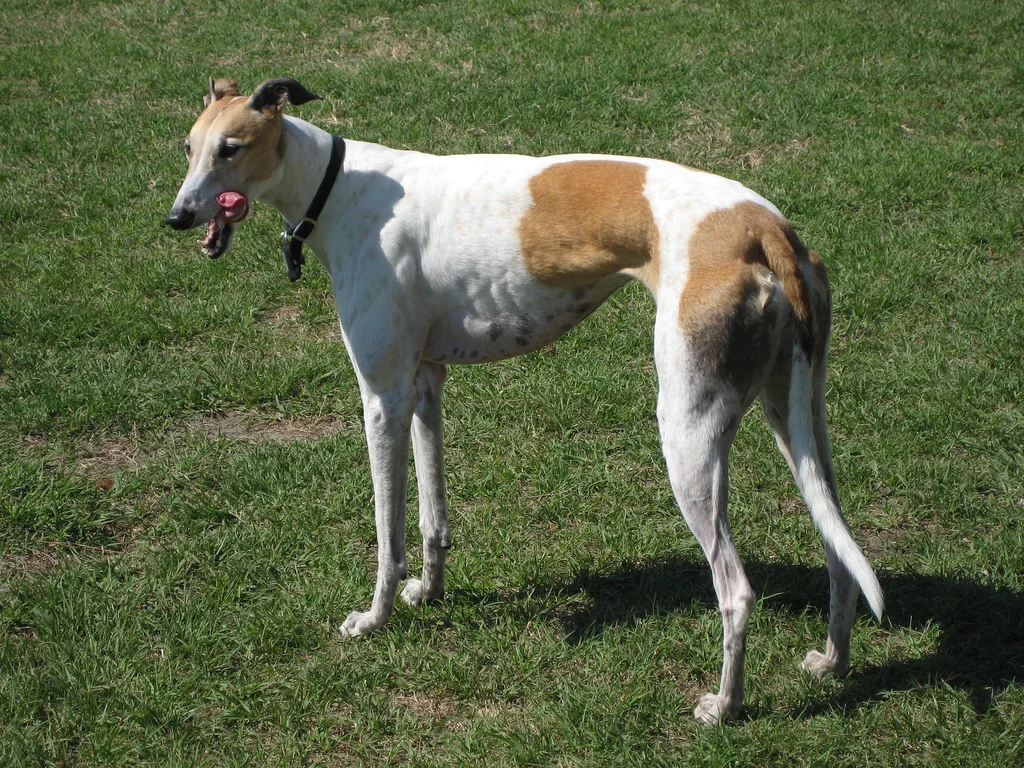
Living with this breed
A Greyhound often rests extensively between outings, but this should not be confused with an absence of exercise or social needs. A retired racing dog may need help learning household routines, stairs or unfamiliar surfaces. Ask what the individual already knows rather than assuming every adult arrives with the same experience.
Exercise and training
Offer regular walks and safe opportunities for suitable activity. Practise coming when called, but use a leash or secure area where chasing could lead to danger. Introduce new environments gradually. A dog accustomed to a particular routine may need time to become comfortable with ordinary neighbourhood sounds and short periods alone.
Coat care
The short coat needs little complex grooming, while feet, nails and skin still require checks. A lean body needs comfortable bedding, and cold or wet conditions may require a well-fitting coat. Measure walking equipment carefully. Avoid assuming that equipment suited to a stockier dog will fit a narrow head and neck securely.
Household considerations
Compatibility with cats and small animals needs individual assessment and careful management. Being comfortable around other Greyhounds is not the same as being comfortable around every dog type or a running small pet. Supervise children, protect resting space and ask the rescue or breeder for concrete observations about daily behaviour.
Health and questions to ask
Discuss bloat, dental care and the individual’s medical history with a veterinarian familiar with sighthounds. Ask about heart and eye assessments where appropriate. Greyhounds have physical characteristics that need informed interpretation, so do not assume a very lean outline is either automatically healthy or automatically evidence of poor care.
Sources and approach
Breedlas combines registry information with editorial interpretation. Trait levels describe general tendencies, not guarantees about an individual dog.
Read our editorial approach