
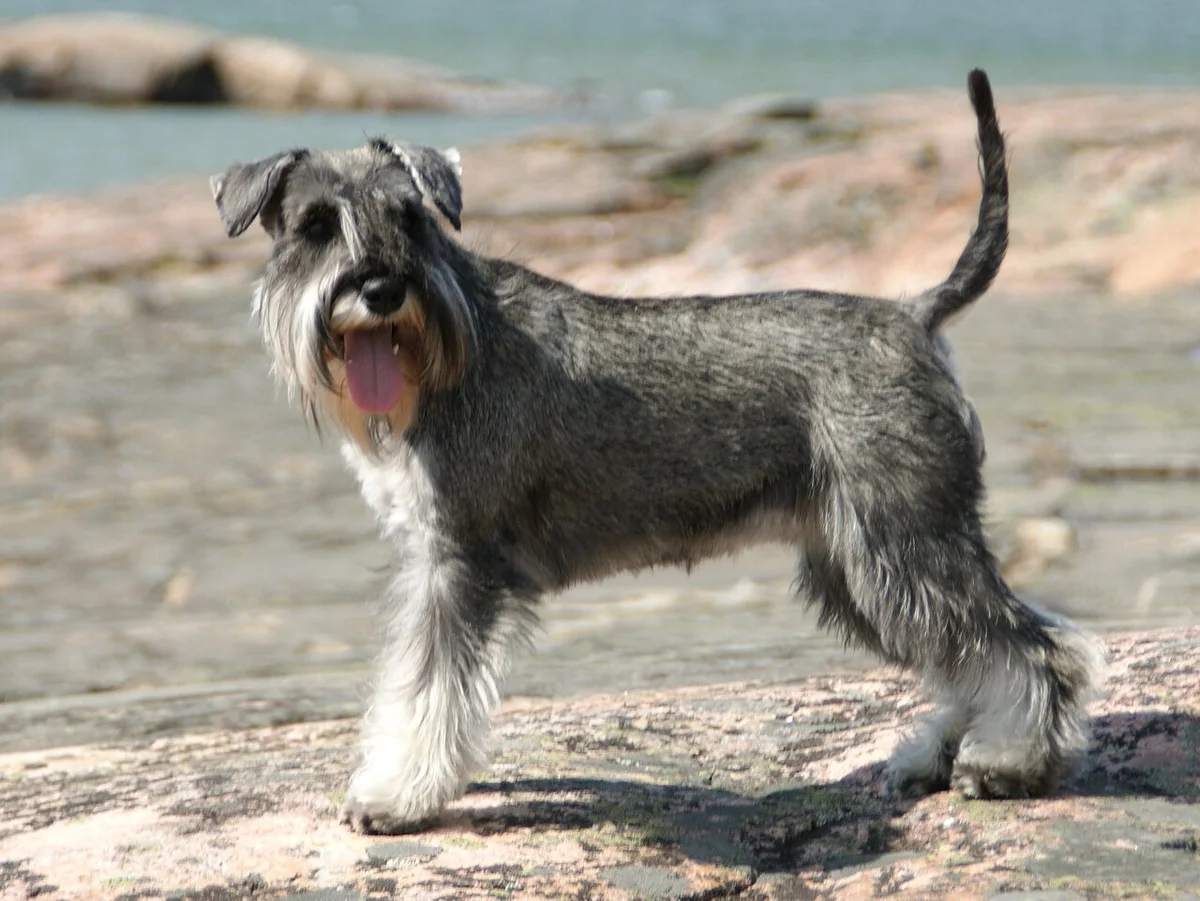
Living with this breed
A Miniature Schnauzer can be an involved household companion without being quiet or passive. It often notices activity beyond the front door and may announce it. Consider shared walls, visitors and how you will teach calmer responses rather than assuming that a small, neatly groomed dog will be unobtrusive.
Exercise and training
Provide regular walks, scent games and short reward-based lessons. Practise coming when called and walking calmly on a leash, and reward quiet observation of ordinary activity. A clever dog needs more than repeated commands; give it clear tasks and opportunities to rest so entertainment does not become a constant demand.
Coat care
The wiry coat needs a maintained grooming plan. Clipping and hand-stripping produce different coat results, so discuss the practical options with a knowledgeable groomer. Comb the beard and leg hair and check for dampness or tangles. Teeth and nails still need regular care regardless of how tidy the trim looks.
Household considerations
Supervise children and other animals and allow room for the dog to withdraw from play. Some individuals have a strong interest in small moving animals. Ask about the dog’s social experiences and ability to settle when left briefly. Training and management should reflect the actual dog rather than a uniform terrier stereotype.
Health and questions to ask
Ask about eye assessments, heart screening and the breeder’s health programme. Discuss family history of urinary stones, pancreatitis and elevated blood fats with a veterinarian. Diet decisions should follow the individual’s needs; a breed label is not a reason to start supplements or specialized food without appropriate advice.
Sources and approach
Breedlas combines registry information with editorial interpretation. Trait levels describe general tendencies, not guarantees about an individual dog.
Read our editorial approach