
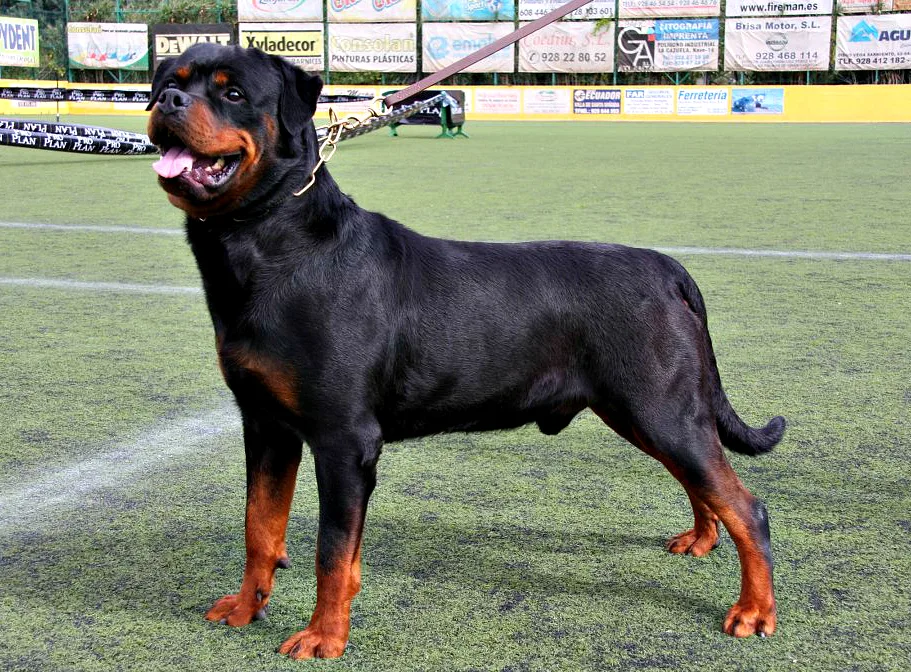
Living with this breed
A Rottweiler is a large, muscular dog that may pay close attention to changes around its home. Quietness is not the same as being undemanding. Consider whether the household has the time and handling confidence to guide a strong adolescent, particularly around visitors, doors and other dogs.
Exercise and training
Use regular exercise, sniffing and reward-based training to build useful everyday habits. Teach walking calmly on a leash, waiting and coming when called before strength becomes difficult to manage. Social experiences should encourage comfortable neutrality. Meeting every stranger at close range is not a necessary measure of successful social development.
Coat care
The short double coat is relatively simple to brush but still sheds. Keep nails and teeth maintained and check skin and feet after activity. Comfortable handling is worth teaching while the dog is young; routine veterinary care is more straightforward when a powerful dog understands the process.
Household considerations
Supervise children and other animals and manage play around food, toys and resting spaces. Ask how an adult dog handles visitors and unexpected events. Discuss local ownership requirements before committing, since rules differ by location. A general description of the breed cannot establish the suitability of a particular individual.
Health and questions to ask
Request hip and elbow assessments and appropriate eye and heart screening. Discuss family health history and any inherited conditions with a veterinarian. Maintain a healthy body condition and age-appropriate activity. Sound movement and identifiable screening records matter more than an unusually heavy build or claims about impressive ancestry.
Sources and approach
Breedlas combines registry information with editorial interpretation. Trait levels describe general tendencies, not guarantees about an individual dog.
Read our editorial approach