

Living with this breed
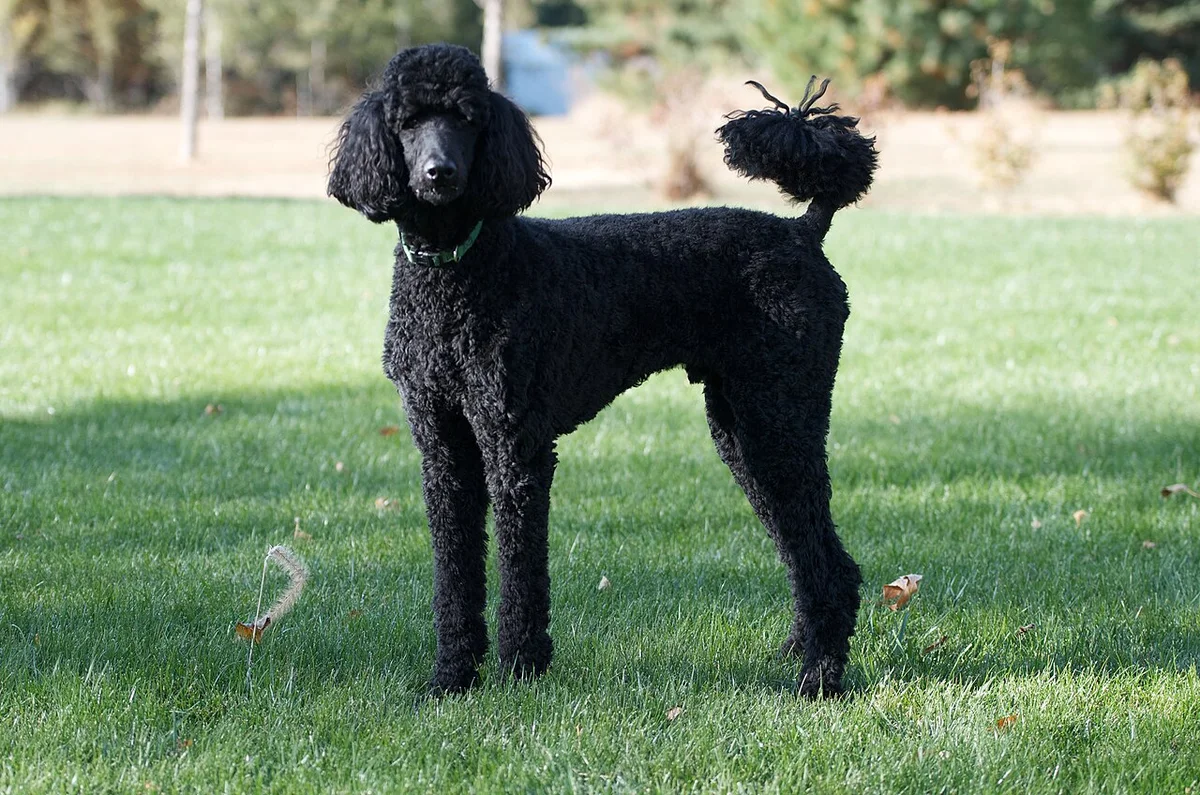
The Standard Poodle is a full-sized active dog, not simply a larger version of a decorative toy. Many enjoy learning and participating in household activities. Decide whether you enjoy training and can maintain a grooming schedule before choosing the breed primarily because loose hair is less obvious around the home.
Exercise and training
Plan substantial everyday activity with opportunities to sniff, retrieve and practise skills. Reward-based training can channel a Poodle’s quick responses, while teaching rest prevents constant demands for entertainment. A suitable activity programme depends on age and health; enthusiasm should not be used to justify overworking a growing puppy.
Coat care
The curly coat continues to need attention in a short practical clip. Brush and comb to the skin, and budget for regular trimming or learn competent home grooming. Matting can hide underneath a tidy surface. Low shedding does not mean an allergy-free dog or a coat that looks after itself.
Household considerations
Allow enough space to manage a large youngster’s energy around children and smaller pets. Gradual introductions and supervised play matter even for a sociable individual. Ask how the dog responds to handling, visitors and being left briefly; those details are more useful than assuming every Poodle has the same sensitivity.
Health and questions to ask
Ask about hip and eye screening, relevant inherited conditions and health in adult relatives. Discuss bloat risk and a practical emergency plan with a veterinarian. This is the Standard size variety of the Poodle; registry height thresholds differ, so compare the actual parent dogs and the standard relevant to your country.
Sources and approach
Breedlas combines registry information with editorial interpretation. Trait levels describe general tendencies, not guarantees about an individual dog.
Read our editorial approach