

Living with this breed
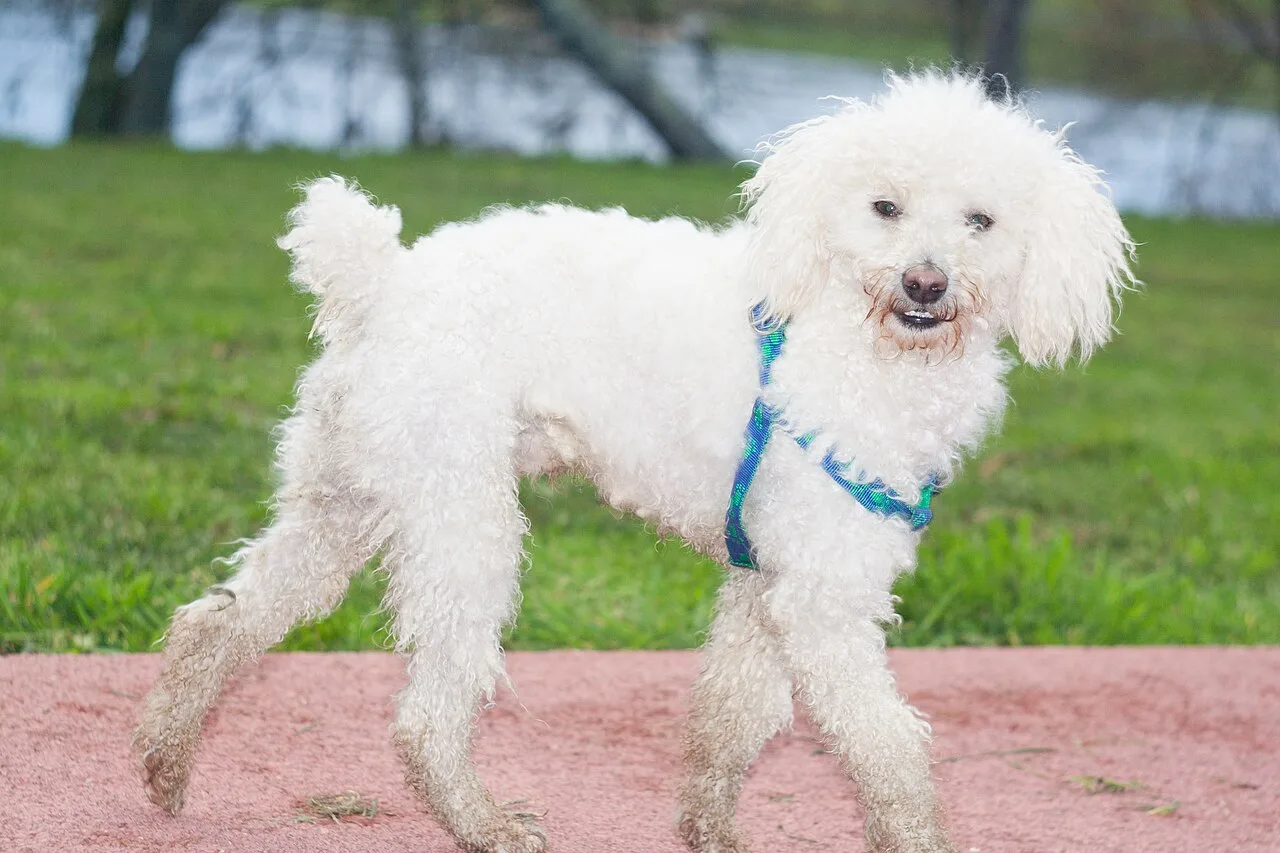
A Toy Poodle offers the learning interest of the Poodle in a very small frame. That can suit a compact home, provided the household wants an involved companion rather than a dog that can be overlooked between cuddles. Make space for rest and independent play as well as close contact.
Exercise and training
Short walks, scent searches and reward-based lessons provide useful activity without relying on rough or repetitive high-impact games. Teach the dog to walk calmly past everyday distractions at its own level. Small size is not a reason to skip recall, handling practice or gradual confidence-building around unfamiliar places.
Coat care
Expect regular brushing, combing and clipping. Even a short pet trim can mat if the coat is only brushed across the top. Introduce grooming gently and plan the cost before adoption or purchase. The low-shedding coat is a maintenance trade-off, not evidence that the dog cannot trigger allergies.
Household considerations
Consider accidental injury in homes with very young children or larger exuberant dogs. Supervise play and give the dog a secure resting place where nobody reaches in. Teach visitors to invite contact rather than scooping the dog up. Individual confidence is more informative than assuming a tiny Poodle will enjoy all handling.
Health and questions to ask
Ask about eye and patella screening and inherited conditions relevant to Toy Poodles. A veterinarian can help plan dental care and safe activity for the individual. Toy and Standard are size varieties of the Poodle, not unrelated breeds. An advertised exceptionally tiny size is not a health credential.
Sources and approach
Breedlas combines registry information with editorial interpretation. Trait levels describe general tendencies, not guarantees about an individual dog.
Read our editorial approach