
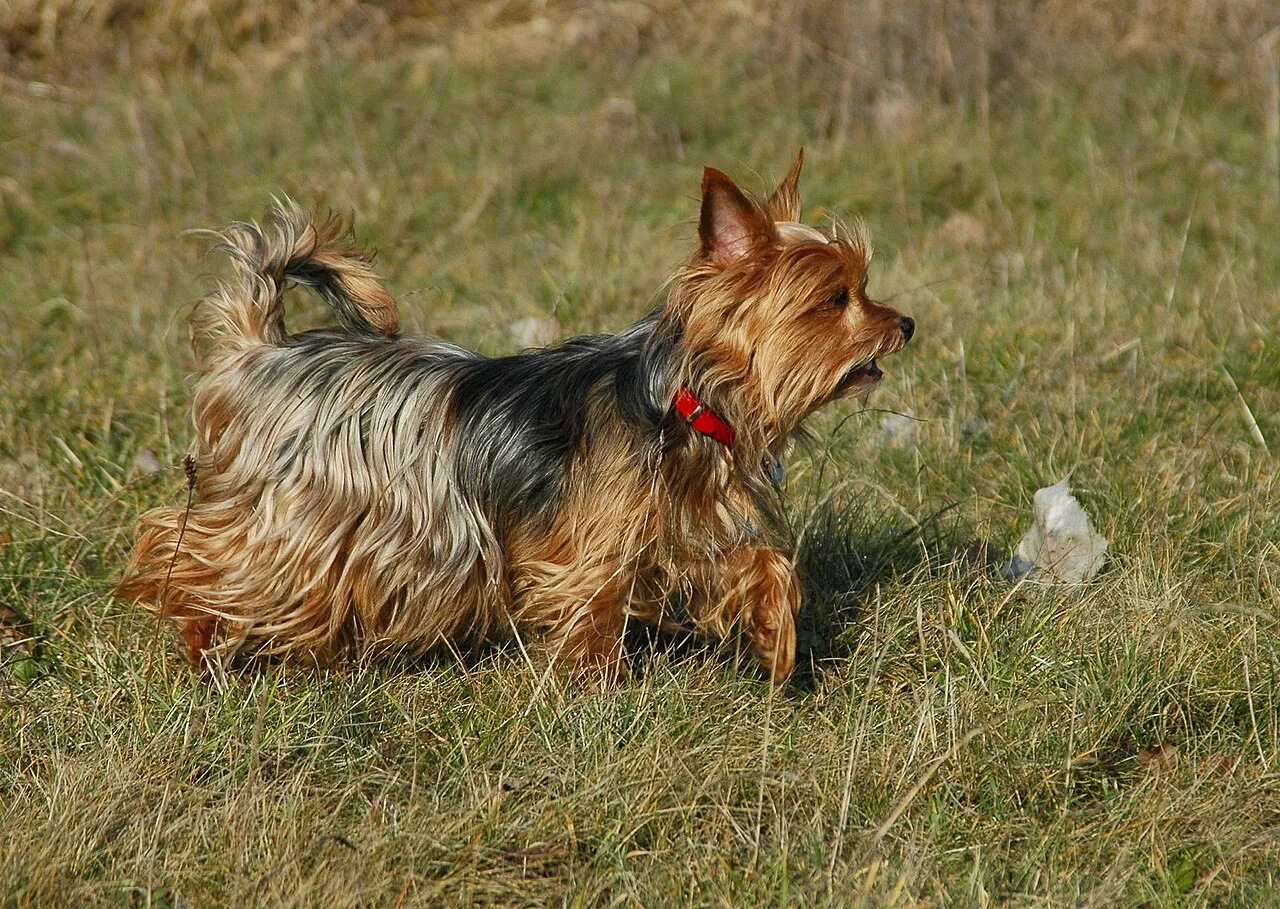
Living with this breed
The Yorkshire Terrier combines a very small body with a terrier’s readiness to investigate. Do not confuse portability with a passive personality. The best fit is a household willing to offer ordinary dog experiences while also preventing rough handling, falls and uncontrolled encounters with much larger animals.
Exercise and training
Give a Yorkie walks at an appropriate pace, scent games and short lessons using rewards. Teach coming when called, quiet observation and comfortable handling. If barking develops around visitors, work on distance and calm alternatives rather than shouting over the dog or assuming that small-terrier noise cannot be changed.
Coat care
The fine, long coat requires frequent brushing and combing, or regular trimming into a more practical length. Hair near the eyes, legs and underside needs particular attention. Low shedding is not the same as low grooming effort. Add nail care and tooth brushing to a routine the dog can learn to accept calmly.
Household considerations
Teach children to interact on the floor and let the dog choose whether to approach. Larger dogs need careful, supervised introductions because even friendly play can cause injury. Ask whether an adult Yorkie can relax independently and how it handles household noise; an appearance-based choice gives little information about those needs.
Health and questions to ask
Ask for information about patellas and eye screening, and discuss teeth and suitable activity with a veterinarian. Avoid marketing that treats unusually tiny size as desirable in itself. Safe access to furniture and gentle, supported handling are worth arranging before a young dog arrives, not after an accident.
Sources and approach
Breedlas combines registry information with editorial interpretation. Trait levels describe general tendencies, not guarantees about an individual dog.
Read our editorial approach